I grew up in a small town, on a small island, where everyone knew everyone, and everyone talked.
Somehow, via osmosis or overheard whispers, every kid in school knew which kids were poor and which kids had parents who fought and which kids lived with their grandparents because they had no parents at all.
Some of the whispers and things we “knew” were probably based in fact. Other stories, well, they were just stories.
When a kid left school, maybe they’d moved to the mainland or Hobart or, maybe, the whisper network hissed, they went missing and nobody’s seen them since.
We had a few of those, at our school – kids who went missing. Maybe they did. Maybe it was only stories.
Our school was in a poor part of town, in a town that was known for being poor. It’s not quite like that today. The show, Seachange, has a lot to answer for. Any town with a beach became hot property, sometime in the early 2000s. Living there became the dream. Back then, though, every kid in town dreamed of getting out.
There was a feeling that we were forgotten. This little town on this tiny island, down at the bottom of the world, and we were all so small. Nobody cared about us.
If you were lucky, you played football. Maybe you’d get out that way. But girls didn’t play football, back then. We danced, and we hoped our jetes would be enough. Mostly, we pictured the day when we’d get on a Redline bus and go.
I often wonder how many of those kids really did get out. I wonder how many disappeared. I changed schools in grade six, because shy, nerdy girls didn’t do well in a school like the one I’d left. I don’t blame my bullies, now. We were all just trying to survive. I made good friends at my new school. I’m still friends with them now. I don’t know much about the kids I left behind.
I thought about them a lot, when I was writing Finch. I thought about all the stories and all the hopes and all the little sadnesses. I thought about sad things that happened in my own family and how grief cannot be outrun. I thought about the things that haunt us.
There was one boy at school who everyone teased, because his mum was disabled. I don’t know what happened to him. I liked him. I hope he got out.
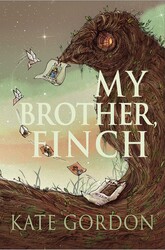
My Brother, Finch is a story about kids who grow up in a town like mine, whose stories don’t get told, but who are loved, fiercely. By those poor parents, those parents who fight, those grandparents who become parents. I don’t want any of them to be forgotten.
Every time I write a book, I feel like it’s my way of talking to all the people who have been in and out of my life, and it’s my way of saying both, I see you and I was here.
I don’t want to be forgotten, either.
 Kate Gordon